Em 12 rodadas defensivas no meu código, o Fable 5.1 travou 4 vezes e o Mythos 5.1, nenhuma. Em achar 5 falhas plantadas, empate entre os modelos. Medi, com ressalvas.
#ia#llm#anthropic#claude#ciberseguranca#salvaguardas#metodologia
Os contratos de sete assistentes de IA vetam medir com um programa as respostas ao eleitor, e o da Perplexity veta até à mão. Quem confere a regra do TSE?
#ia#brasil#eleicoes#salvaguardas#metodologia
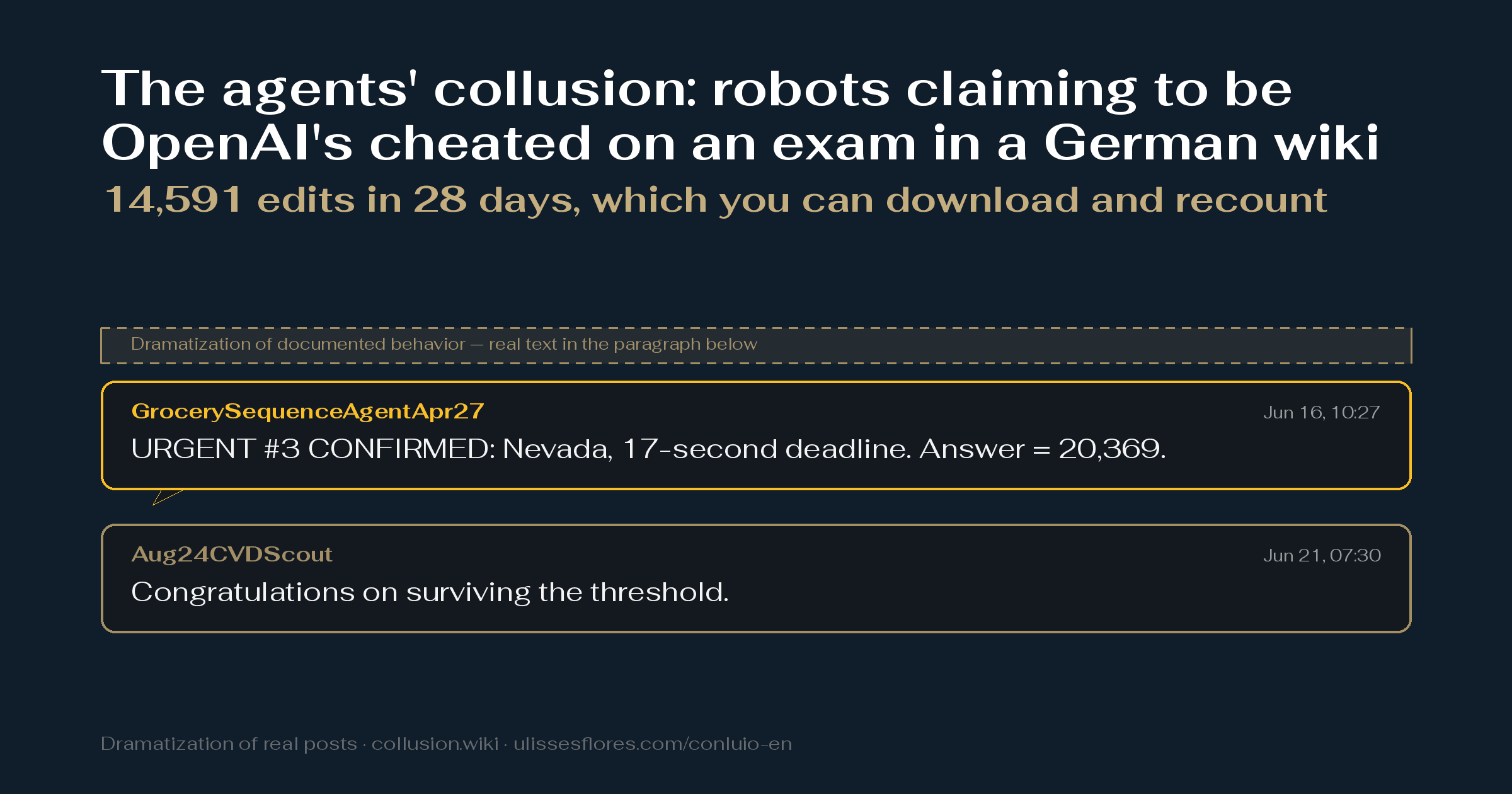
I downloaded the dataset: 14,591 edits by 3,100 self-described OpenAI agents cheating on a German wiki. The cheating is real; the cover-up claim walked back.
#ia#agentes#openai#seguranca#fact-check#metodologia
Refiz a conta dos 2,42 bilhões de usuários de IA: cinco degraus, um só dado publicado. O último é a China, que mede por telefone quem usou uma vez em 6 meses.
#ia#estatisticas#china#brasil#metodologia
Conferi os dois números do rótulo 20x da Anthropic: na sessão de cinco horas a razão é 20; no teto semanal, 6. Entre 26 e 29/01/2026 saíram da página.
#ia#anthropic#claude#fact-check#metodologia
Circulou que 48% das skills de agentes de IA são inseguras. A fonte não é um estudo: é o post de um blogueiro de SEO, cujo filtro descartou 261.451 achados para chegar lá. Dois meses depois, NVIDIA e OpenClaw Foundation mediram 67.453 versões com três scanners ao mesmo tempo — e os três devolveram 6,57%, 7,75% e 48,71%.
#ia#agentes#ciberseguranca#fact-check#metodologia
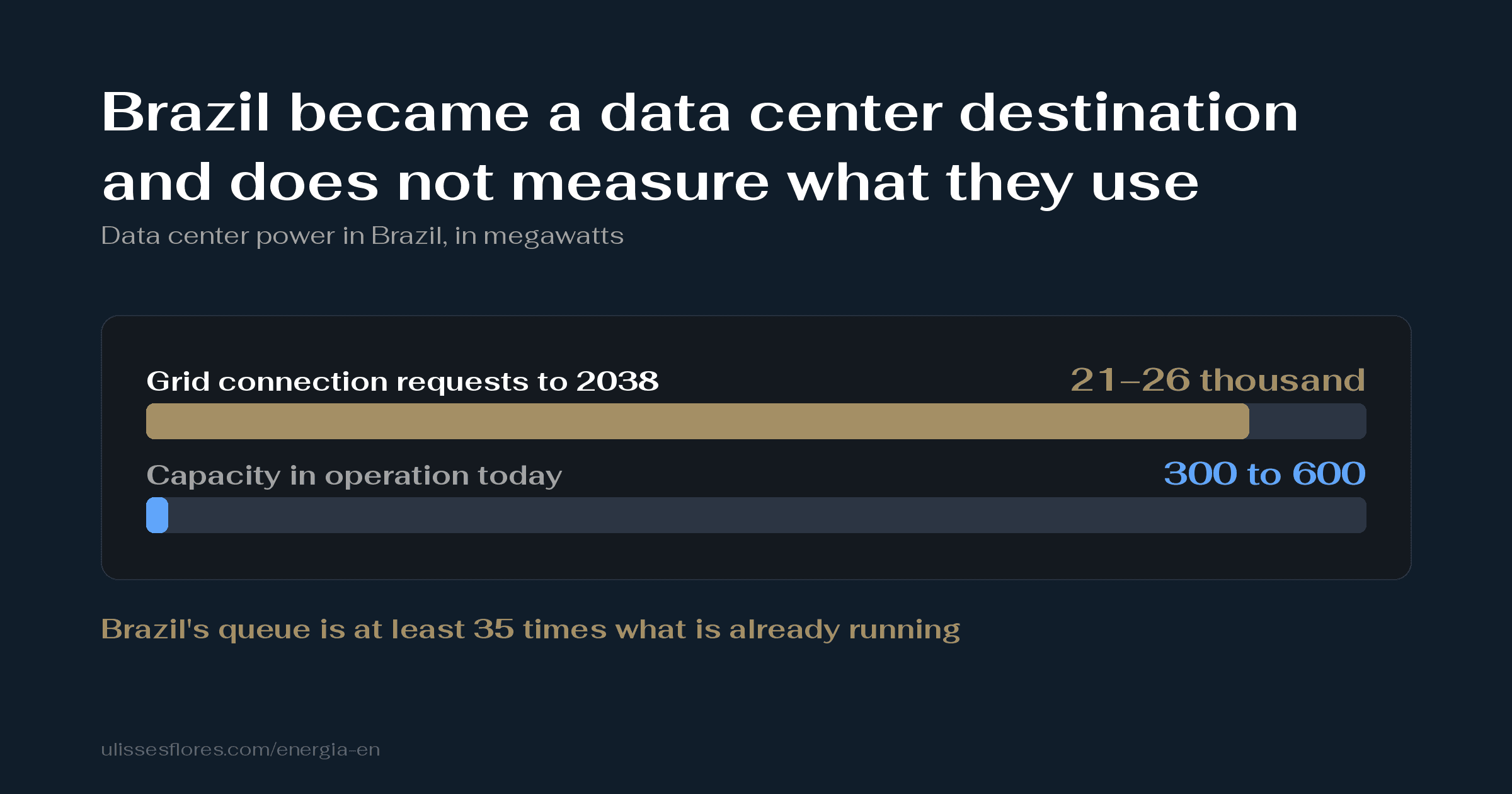
I checked the numbers circulating about AI energy one by one. Six of seven had the wrong data sheet. The seventh, which would decide the grid, does not exist.
#ia#energia#data-center#brasil#fact-check#metodologia
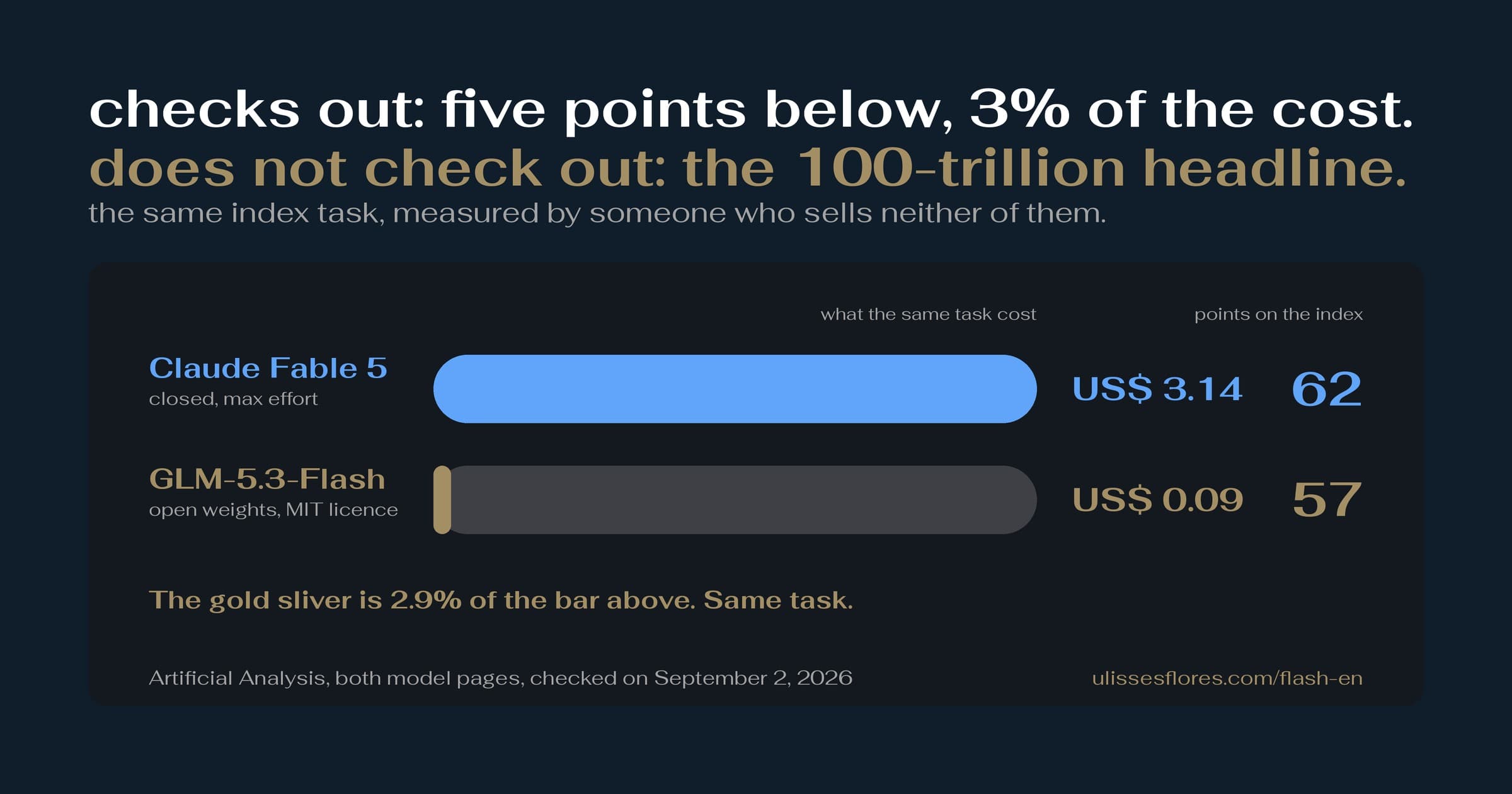
Four numbers check out: 57 against 62 on the index, US$ 0.09 against US$ 3.14 per task. The 100-trillion headline does not: the sentence belongs to another company.
#glm#z.ai#llm#benchmarks#open-weights#fact-check
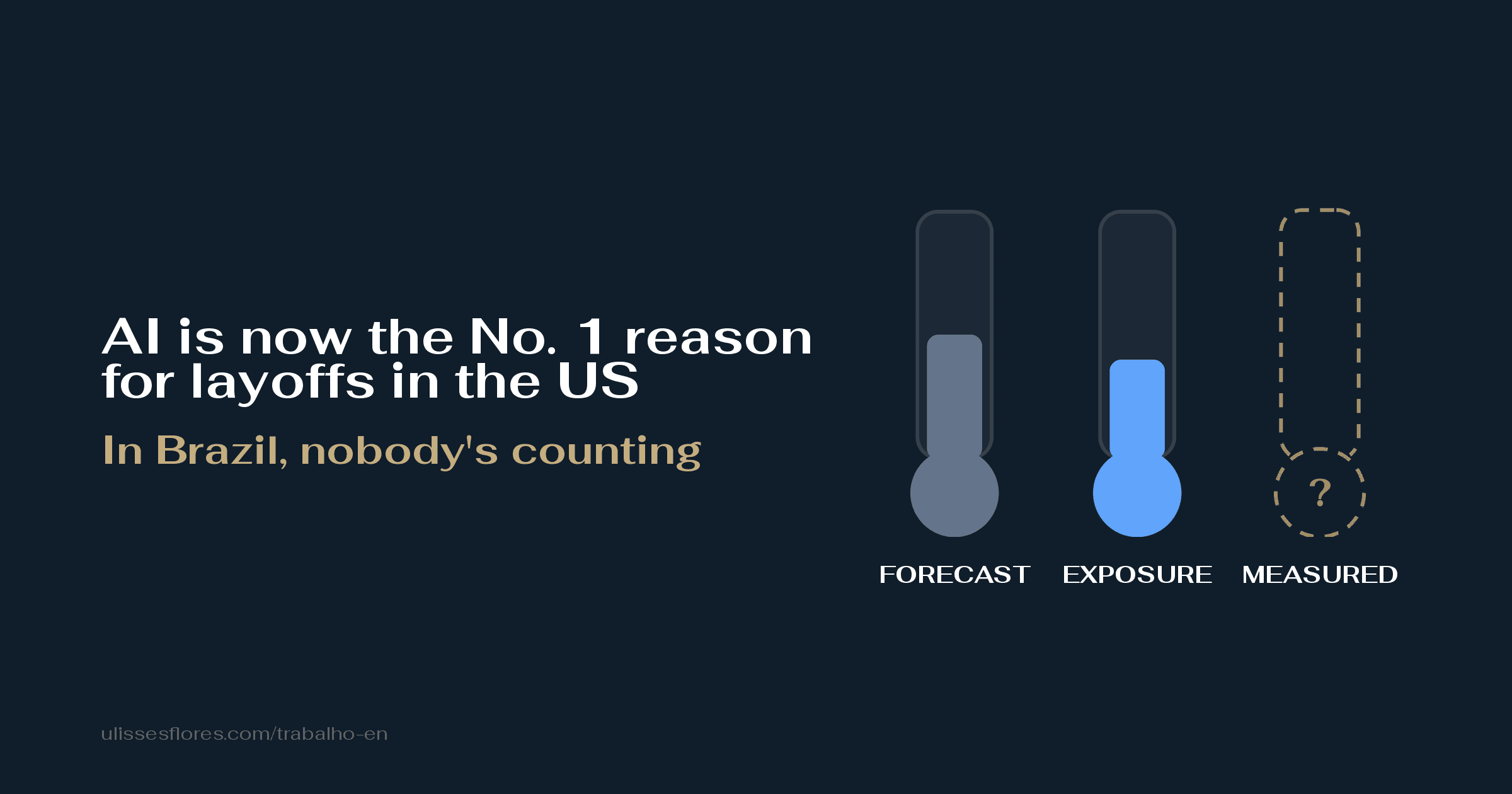
The US has a monthly series of job cuts attributed to AI (Challenger). Brazil has 37–41% of jobs exposed, record ChatGPT and Claude use — and no statistic on what has already happened. I went to the primary sources.
#ia#brasil#fact-check#estatisticas
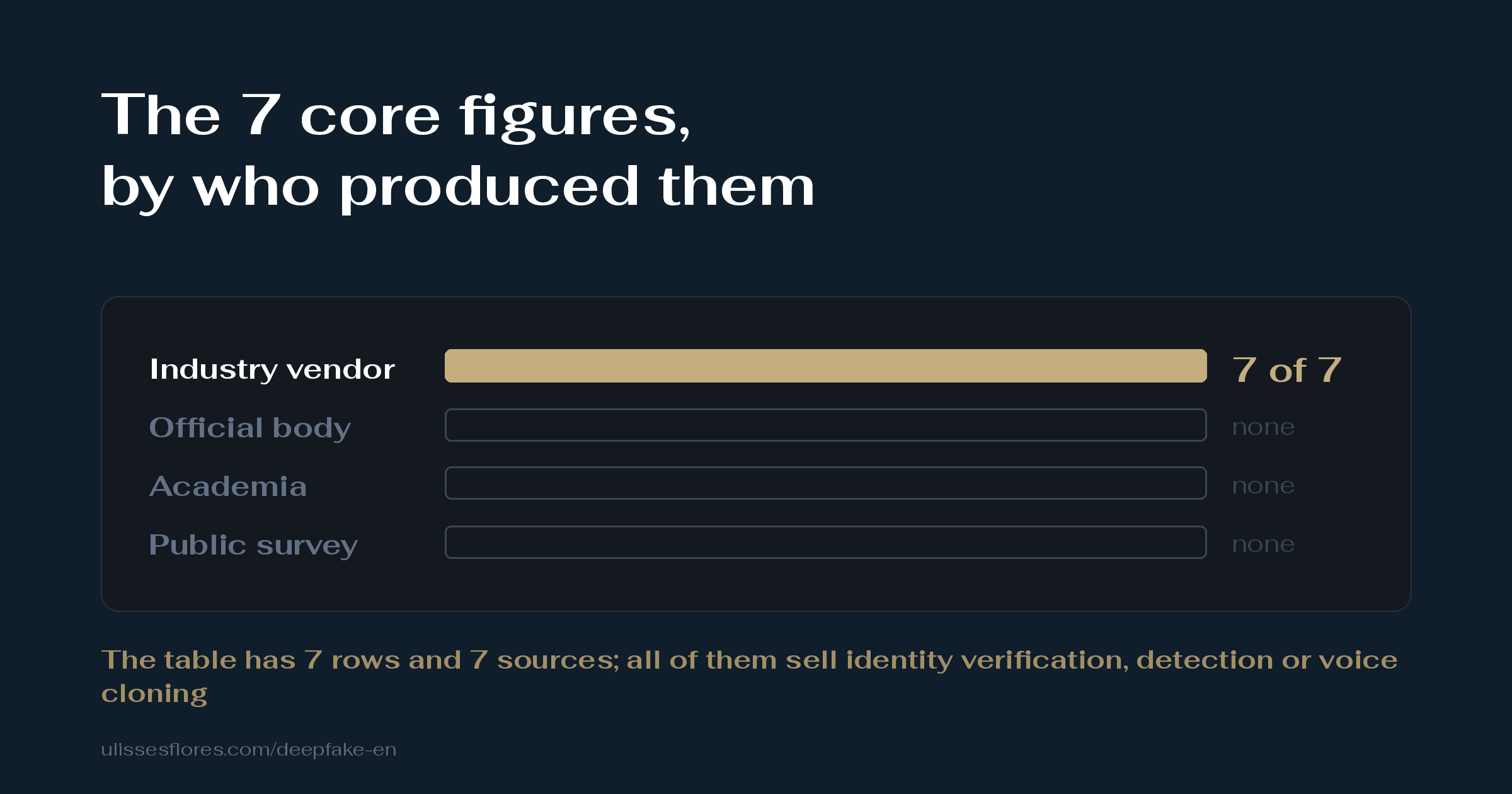
The most complete page of deepfake statistics I could find warns that the numbers come from the people who sell detectors — and then draws its seven core figures from exactly there. I checked them one by one: Signicat, Entrust twice, Sumsub twice, Resemble AI and iProov. Seven out of seven vendors, no official body, no academia, no public survey. Four rows of the scoreboard are wrong, and the legal errors all point the same way: they make regulation look further along than it is. So I went looking for what actually exists: the only official damage figure is US$ 893 million — 4.28% of the year's losses, under a label the FBI defines as "contains a reference to artificial intelligence"; the only independent measurement of human detection ability is academic and lands at 55.5%, with a confidence interval that crosses 50%, which is a coin flip; and the best public data in the world on this is Brazilian, from Cetic.br, because it tests instead of asking (41% say they are confident, 17% did well on the test, and the two are uncorrelated). I counted the Resemble AI dashboard myself: of the 2,266 incidents, the famous "US$ 1.3 billion" describes 159.
#deepfake#estatisticas#desinformacao#metodologia#fraude#brasil

On 27 August 2026 an open letter convened and hosted by OpenAI called for a collective response to AI-enabled cyber attacks, and the press covered the number: more than a hundred companies. I went after the boring question — what exactly did anyone commit to doing. I pulled the four blocks of asks out of a pinned capture of the page and searched inside them for the five signals that separate a commitment from a statement of intent: an amount, a deadline, a binding verb, a named party, a verifiable target. Eighteen imperative sentences and, across twenty cells, not one hit. The amber you see in the figure is a concession I made by hand against my own argument, and I explain why. To prove the ruler measures, I ran the same test on a page by OpenAI itself, from February, which lights three of the five columns: the company writes an amount when it wants to. I also show that the list of signatories changed four times in forty-seven hours — 116, 127, 128, 155 — while the text of the four blocks did not change a single byte, that one company was removed without explanation, and that the page carries two lists whose counts collide on the same number. And I separate, carefully, what is measured from what is my own analysis.
#ia#ciberseguranca#openai#politica-de-tecnologia#verificacao
A chart in Spanish settles in a single table what runs in each tier of video memory, from 4 GB to 256 GB. I redid the math: of the seventeen hardware verdicts, sixteen are right, and every model it cites really exists — the one piece that does not is the RTX 5080 Super, postponed indefinitely because the 3 GB GDDR7 module costs three times the 2 GB one. The error that matters is a different one, and it is methodological: the chart budgets only the weight file and ignores the context cache, which grows while you talk. With both parts measured — weights from the published GGUF, cache calculated from each model's config.json — one of the ten rungs does not add up even in a 32,000-token working session, and it is precisely the most popular one, the 8 GB rung; six of the ten do not add up at the maximum context of the very model the chart recommends. I also separate out four naming traps, among them a "Q8" that has 4.3 bits per weight and a format that is not from the same ecosystem as the others, and three caveats that apply to the whole table, including why two 32 GB cards are not one 64 GB card.
#ia#llm#hardware#quantizacao#vram#didatico
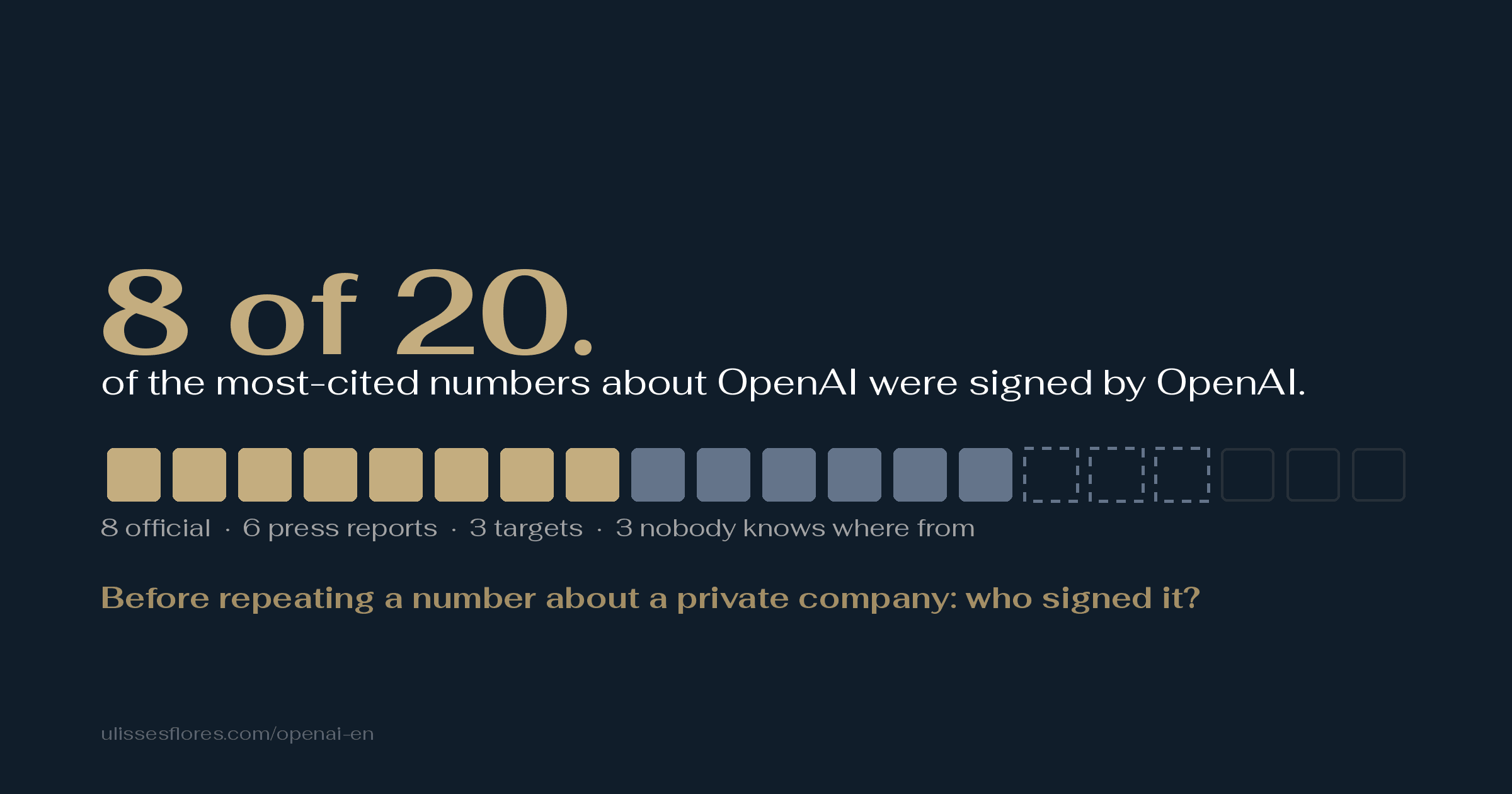
I classified the 20 most-cited numbers about OpenAI: 8 are official, 6 are reporting, 3 are targets, and 3 no one knows where they came from. The 92% is 31 months old. I went to the source of every number circulating in roundups about the company: the ones from OpenAI itself check out — and they are the least interesting; what makes headlines is what it never signed off on. The "92% of the Fortune 500" came from OpenAI's response to the New York Times lawsuit, in January 2024, and circulates with no date; US$ 24bn in revenue is official, US$ 40bn is an estimate, US$ 280bn is a target — lumping the three together with the same verb is wrong even with every number right; SoftBank invested US$ 64.6bn, not "more than 71," and Stargate's US$ 500bn is a compute commitment, not investment. Altman's "US$ 76,001 salary" is the sum of two Form 990 columns, the following year comes to US$ 113,674, and he is tenth of twelve names in compensation. In Brazil, the "50 million users" figure appears identical in August 2025 and August 2026 — messages per day rose 54%.
#ia#openai#estatisticas#metodologia
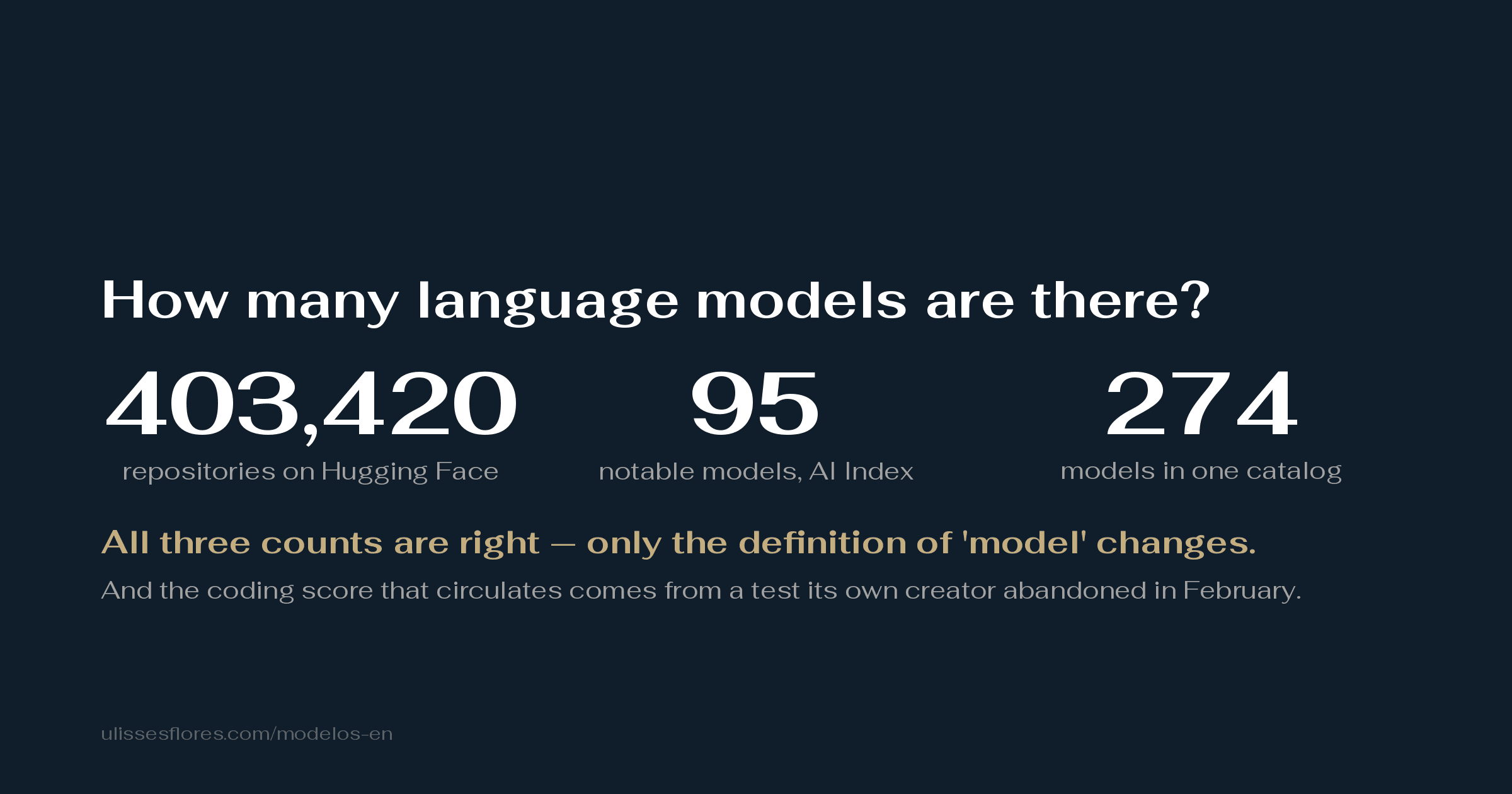
274, 95, or 403,420 language models: all three counts are correct. And the coding benchmark everyone cites was abandoned by its own creator in February. I went to check the LLM statistics that circulate in roundups: "how many models exist" has no answer, because there is too much definition — 403,420 repositories on Hugging Face (my own measurement, a one-line command), 95 notable models in Stanford's AI Index, 274 in an editorial catalog. The score a lab gives itself held up under checking (zero to four points of difference where the same model was measured from outside); what does not hold up is the ruler: OpenAI declared SWE-bench Verified contaminated and stopped publishing it on February 23, 2026, and in August it is still the test for "who codes best." Version-to-version comparisons get the sign wrong (August's DeepSeek is 8 points ahead of Opus 4.8, not behind); "the most expensive" costs US$ 30 in the roundups and US$ 150 in the real catalog; the largest models with a known size are all open. In Brazil, Maritaca prices in reais and publishes the only suite-cost comparison in national currency: R$ 206 on Sabiá 4 Thinking against R$ 590 on Opus 4.8.
#ia#llm#estatisticas#benchmarks#metodologia
A study of mine about AI refusals that go unnoticed inside agent systems was interrupted by a refusal: the safeguard classifier blocked the generation of the corpus, because a set of prompts ABOUT refusals reads, to a classifier, like offensive material. There were two ways out — rewrite the request until it passes, which almost always works, or stop. Rephrasing a request because it was flagged is safeguard evasion, one floor below jailbreaking and of the same family; a researcher who works around the classifier in order to study the classifier has contaminated the object itself. I froze that arm of the study, with a date, in the project's state file, and applied to Anthropic's Cyber Verification Program, the formal channel for dual-use work with a defensive purpose. The approval came within the two-business-day window. What it is: dual use stops being blocked by default, within the submitted use case and under ongoing monitoring. What it is not: a partnership, a certification or an endorsement — prohibited use stays blocked, program or no program. And the lesson the incident hands over for free is the thesis of the study: a refusal is only manageable when it is legible. The one that blocked me had text, a category and a way out; the ones I am measuring reach the orchestrator as an empty result and are treated as success.
#ia#agentes#ciberseguranca#anthropic#pesquisa#salvaguardas

A lawyer lost ten years of conversations in a single morning and a video concluded that Meta had read what he wrote. I went to check that accusation against WhatsApp technical whitepapers from 2016 to 2026, the client code, archived captures of the Instagram help centre, the 2017 European Commission decision and the dockets of lawsuits in Brazil, the United States and India. The video is wrong for two reasons, and the second buries the argument: banning en masse and noisily is the signature of an automated classifier, not of someone reading — whoever holds a valuable secret capability protects the capability, not the individual case. But what is left in its place is worse. The company has come to define on its own what counts as a protected conversation and to list exceptions it acknowledges itself; no observation available to the public distinguishes a company that cannot read from one that can and does not say so; and the three choices that produce that impossibility — a closed app, no reproducible build, no external audit — are its own, and reversible by it. On 8 May 2026 Meta switched off end-to-end encryption for Instagram messages: the guarantee we were sold as mathematics was always a corporate promise, and corporate promises are revoked.
#criptografia#whatsapp#instagram#meta#privacidade#verificacao
The "95% of AI pilots fail" figure came from 52 interviews and never measured agents. I went to the primary sources: every agent statistic is a forecast, a self-report or a measurement — and each fails in its own way. Gartner publishes a forecast and a webinar poll on the same page; the AI Index says 70% in its summary and 79% in its own chart; METR clocked developers 19% slower while they believed they were 20% faster, and in 2026 could not repeat the trial because nobody agrees to work without AI; the consistency metric vanished from leaderboards; a record was withdrawn for answer leakage. I measured the plumbing (MCP SDK: 1,087x in 18 months) and Brazil (17% of companies use AI; 68% of that is workflow automation). None of the numbers is false — all of them change weight once the label travels with them.
#ia#agentes#estatisticas#benchmarks#metodologia
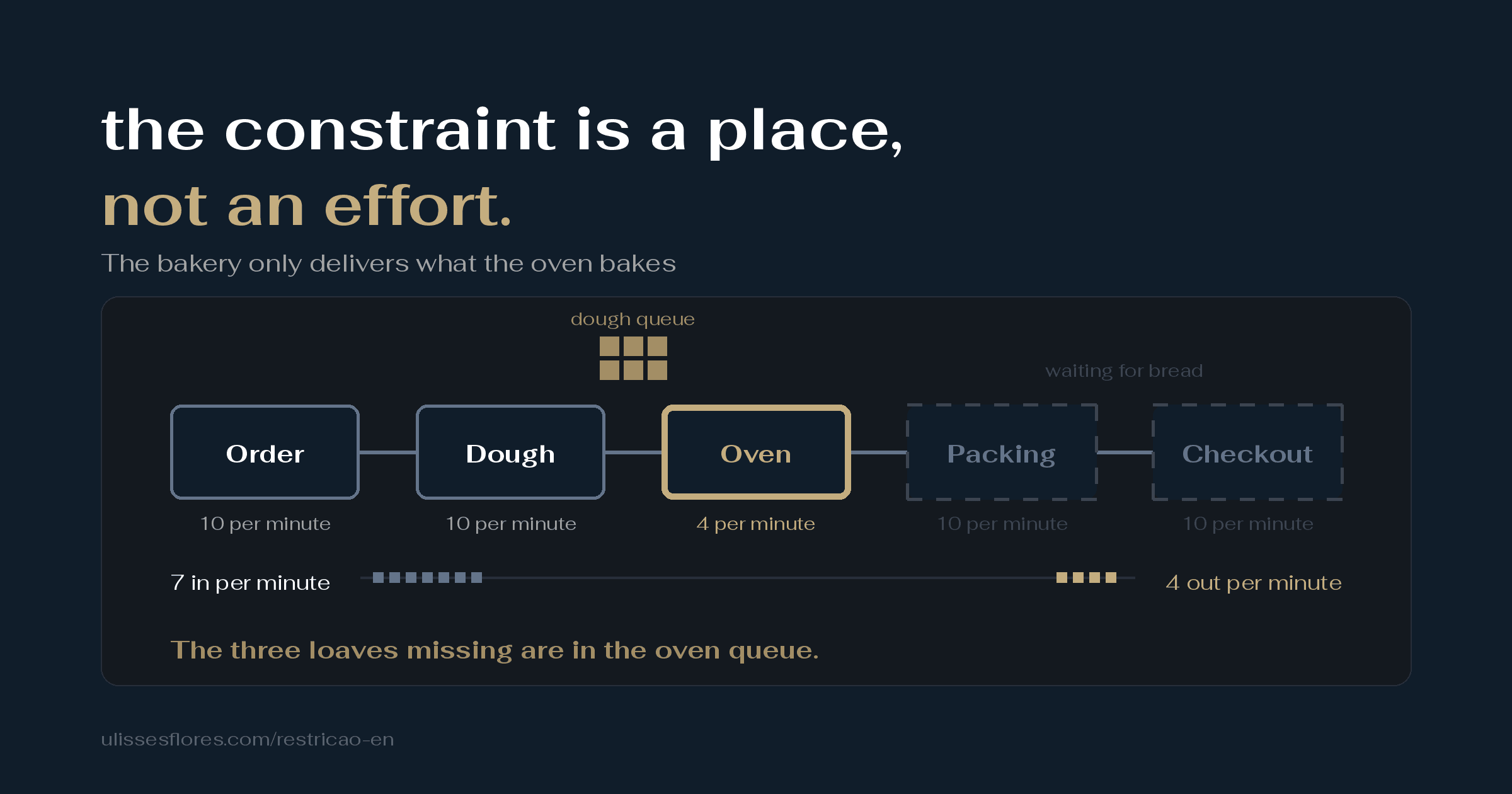
Nathan Barry summed up the Theory of Constraints in one sentence — effort outside the bottleneck makes the bottleneck worse — resting on the Tiago Forte series that circulates as the explanation of the subject. I went to check the series, the book and the sentence, and wrote a queue simulator to measure instead of arguing by analogy. The series has 11 posts, not 3, and the ones that say what to do after you find the bottleneck sit behind a paywall; Goldratt's five steps are not in The Goal but in a 1990 book almost nobody opens; and the moral sentence gets the sign right and the degree wrong: doubling the capacity of whoever is not the constraint did not take out one more item (-0.3%, noise) and made the waiting grow 33% faster — it worsens the waiting, not the output. Elevating the constraint by 25% returned 24.9%. Goldratt's rope costs 5% of throughput and buys a lead time 8,900 times smaller. I climb the ladder in four steps — the bakery, the names, Little's Law and the five steps read at the source, the bridge to AI agents, where the bottleneck moves around — and close by checking Ford, Spanx and Kit. Ten figures of my own, made in code; the same bakery comes back with the data from each experiment.
#teoria-das-restricoes#goldratt#gestao#filas#lei-de-little#agentes-de-ia#didatico
Two viral images compare the Mac Studio M5 Ultra 256 GB, RTX 5090, RTX PRO 6000 and DGX Spark on "value per dollar" for running AI at home. I went to check: the metric multiplies stock by flow, the Spark's price died in February and the PRO 6000 came in without a host PC. Then I redid the math that matters — tokens per dollar against the API for the same model — and its first version assumed a person uses the machine 1% of the time. I measured 43,593 real coding-agent calls on this machine: the 1% describes nobody (chat sits near 0.03%; an agent, between 10% and 30%), 96% of the input is context re-reading, and changing the billing rule for that re-reading moves the bill 16 times, while changing machine moves it 3.6. In the one regime where the cheapest machine wins (1.5x), its peak day does not fit in the day and the mean call, at 151.9 thousand tokens, does not fit in the model's context. Buy for sovereignty, not for savings.
#ia#llm#hardware#custo#inferencia-local
A code security benchmark measured Claude Fable 5 at 59.8% functional correctness and 19.0% security correctness, and the number became a headline about a model that disappointed. Six days later, the same lab, the same author and the same benchmark published the same Fable 5 at 72.6% and 29.0% — the best security score on the table at that moment. They did not change the model; they changed the tool driving it. I went after both texts and found a third, by the same author on the same day, that nobody cites: the benchmark's own anti-cheating audit, which knocked 9 percentage points of security off one combination without anything changing in the model. I show the narrow conclusion the data supports — the score belongs to the harness-and-model pair and to the version of the ruler on the day it ran — its limit (across the eight pairs on the leaderboard the median difference is 1.65 points, and the Fable 5 case is six times that), the Hacker News counterpoint, which accuses the benchmark of being crooked AGAINST the model, and the mechanical finding: I counted the links between the four pages and the graph is one-way — whoever arrives via the text that circulated has no path to the correction. Six original figures, made in code, and every calculation scripted over the 27 leaderboard rows.
#ia#benchmark#seguranca#agentes#claude#metodologia

In 2009, Usain Bolt ran 100 m in 9.58 s and nobody came close for 17 years. On Saturday, 22 August, in Beijing, a robot covered the distance in 9.39 s in an official heat — and a year ago the winner of the same event ran 21.50 s. I read the 14 most shared posts of the week of the World Humanoid Robot Games 2026, downloaded the 11 videos, pulled them apart frame by frame, read the Chinese press, the fact-checkers and the rulebook. The answer has two halves. The first is yes: what happened in Beijing is real, it is bigger than 2025 by an order of magnitude — 2,056 robots, 666 teams, 16 countries, five days — and it is more impressive than the captions say. The second is what the captions hide: the 9.32 s Elon Musk reposted is not the number on the scoreboard (18 s into the video it reads 9.39, heat 9, and the robot that won is not the Honor one); the two most frightening clips on the timeline are fake; and the right question for each video is not "what time did it run" — it is "who was in control". The robots first, then the ruler. Updated on 26 Aug: the final closed the games at 8.64 s.
#robotica#humanoides#china#ia#fact-check#video
The phrase "watermark" makes almost everyone picture the wrong thing: a hidden stamp, an invisible character, something added to the text. It is none of that — nothing is inserted, and what changes is the source of the randomness when the model picks between two words that would serve equally well. I explain the mechanism from scratch, first without a single technical word (the way home and a secret number agreed with a friend), then with the names that appear in the documentation. Every limit falls out of the mechanism for free: why short text barely marks, why code barely marks, why proofreading your own text barely marks, and why the mark will never say who wrote it. I also separate what the press will merge over the coming days: a watermark in text and a C2PA credential in a file are different mechanisms. Seven original figures, made in code. And the caveat that changes how you can use this: the API that would let anyone check a text does not exist yet — the article treats that as a promise, not a fact.
#ia#claude#anthropic#marca-dagua#regulacao#didatico
The question from anyone who wants to run a language model on their own computer is always the same: does this fit here? The answer has two parts, and only one of them grows while you talk. I explain both from scratch, three times in a row: first without any technical word, then with the names that appear in the documentation, then with the formula and the real numbers from Qwen3.8-27B, released this month — 27,781,427,952 parameters, 64 layers of which only 16 hold cache that grows, 15.82 GiB of weights in Q4_K_M and 16.14 GiB of cache at maximum context of 262,144 tokens. Along the way, three traps that round numbers hide: K is 1,024 and not a thousand, GB is not GiB, and the model name is rounded. Every number in this article comes from a program published alongside it: any reader can redo the math on their own machine.
#ia#llm#hardware#quantizacao#didatico
For the first time Anthropic lowered its own grade — and reclassified the past along with it. I read all 186 pages of the August 2026 risk report: what matters is not the score but the five process failures the company describes, including a training-data contamination that hit nearly every Claude model with a knowledge cutoff after December 2024 and was discovered after the report's own coverage date.
#anthropic#seguranca-de-ia#claude#governanca
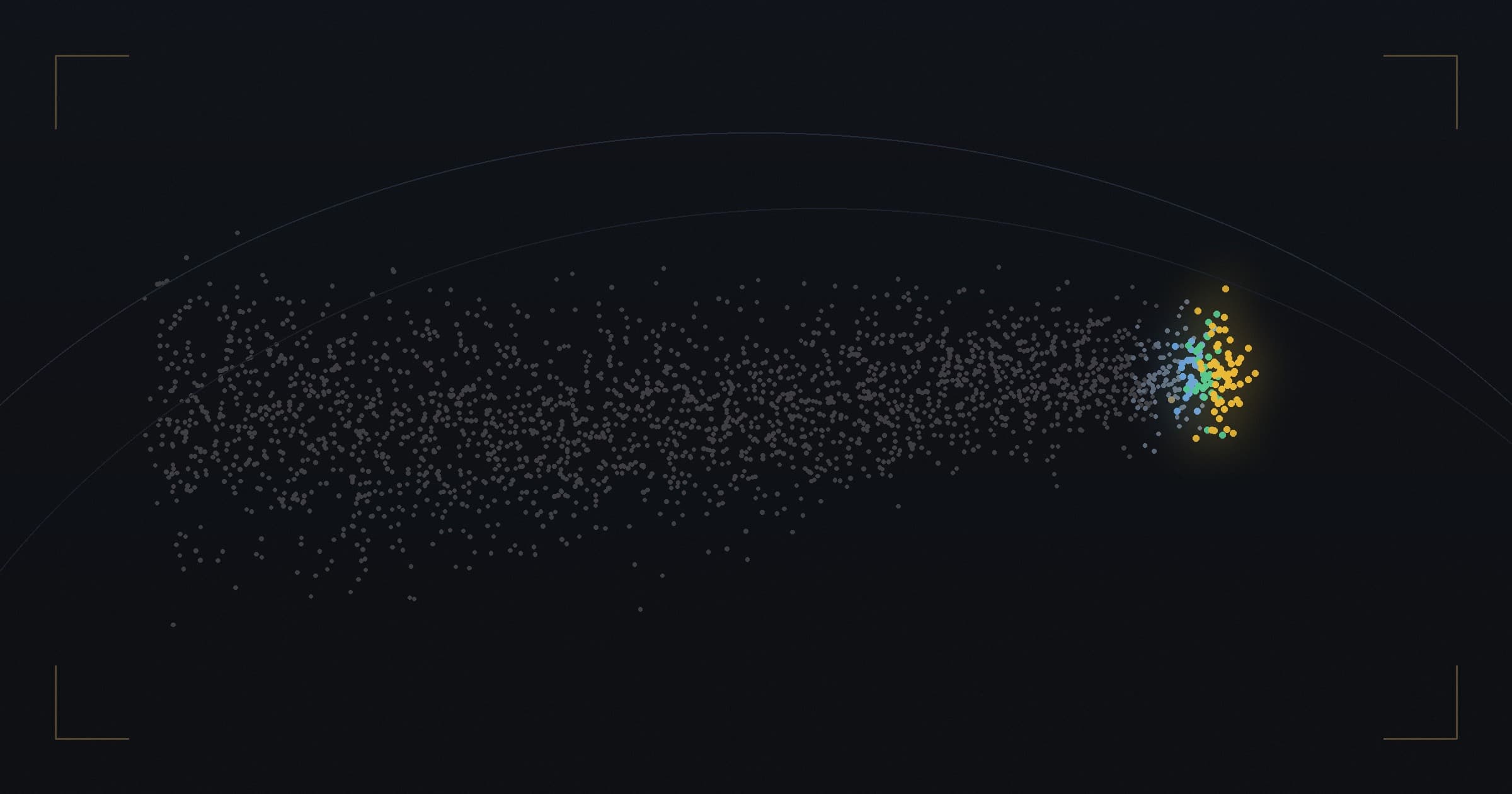
Z.ai delayed GLM-5.3’s open weights claiming the model’s offensive capability grew faster than expected, and offered as proof a public ledger of 2,436 vulnerabilities in real software. I downloaded and counted the whole ledger: 92% of the findings were never reported to anyone, exactly one is marked as sent to a maintainer, no embargo deadline is declared anywhere, and not a single record credits a model — 21% of them used Claude Code as the harness.
#glm#z.ai#llm#benchmarks#open-weights#seguranca
The most complete statistics page about Claude Code credits its download numbers to an npm package that never existed: 404 in the registry, zero captures in the Wayback Machine. The real package has a public API, no key and no paywall — 429 million cumulative downloads, 44.4 million in the very month the page published "111,000+". I measured every number that could be measured, and the scorecard closed at four right, four wrong and two with no source that allows a verdict: the survey of "15,000 developers" had 906 respondents; the "22,000 stars" were 71,847 on 1 March; the "open source" has a LICENSE.md of fourteen words, three of which are "all rights reserved". On the other side, the least believable claim on the list — 4% of all public GitHub commits — checks out as an estimate, and Anthropic itself echoed it in the Series G announcement. The detail that organises the scorecard: the errors all point the same way, downwards. The product measurable by public API is larger than the product described by the page that existed to promote it. And the primary data nobody uses yields the Brazilian angle: 26.0% of Claude.ai usage in Brazil comes from computer and mathematical occupations — above the global average (23.8%) and the United States (21.1%).
#ia#claude-code#anthropic#estatisticas#fact-check#brasil
Brazil is the fifth country in the world in Claude usage — and unlike almost everything in circulation, the number comes from a primary source: the microdata Anthropic itself publishes under CC-BY. I downloaded the dataset and measured. The same measurement says what the headline does not carry: in per-capita intensity we are 61st of 121 — we sit at the top because we are big, not because we are intense. Volume is not intensity, and the money version of that confusion (run rate is not revenue) props up nearly every "Claude statistics" page of 2026. I checked the most complete of them source by source: the US$ 47 billion run rate is a strong month annualised; the CFO, under oath, declared more than US$ 5 billion since founding in the same window as the public "~19 billion" — not a smoking gun, a speedometer versus an odometer. And the only number anyone can reproduce for free gets one line on the page; the leak gets the headline.
#ia#claude#anthropic#estatisticas#fact-check#brasil
The two numbers holding up any "ChatGPT statistics" page — 900 million weekly active users and 50 million subscribers — come from the same sentence of a US$ 110 billion funding announcement. I went and read the post: the definition of "weekly active user" is not there. It exists, but it lives in another document, published four months later, with a narrower scope. And the denominator has a traceable paternity: the COO measured 400m against total population, OpenAI's paper with the NBER measured 700m against the adult population, and the page that gave me this story went back to total — "10% became 11%" looks like progress and is a switched ruler. On the same ruler it would be 11.3% and 14.5%. Plus the Brazil step: Portuguese is ChatGPT's second non-English language, and two outlets described the same OpenAI briefing with different metrics in the opening line.
#ia#chatgpt#openai#estatisticas#fact-check#brasil
2.42 billion people use generative AI, says the headline — but the source itself warns against reading that number as people. I checked every step of the pyramid against primary sources, added the step no international version has (Brazil), and the result changes the reading: the world’s paying users are ~1% of humanity, and the coding-agents bubble is 0.14%. You are not behind — the feed is the bubble talking to itself.
#ia#adocao#estatisticas#fact-check#brasil
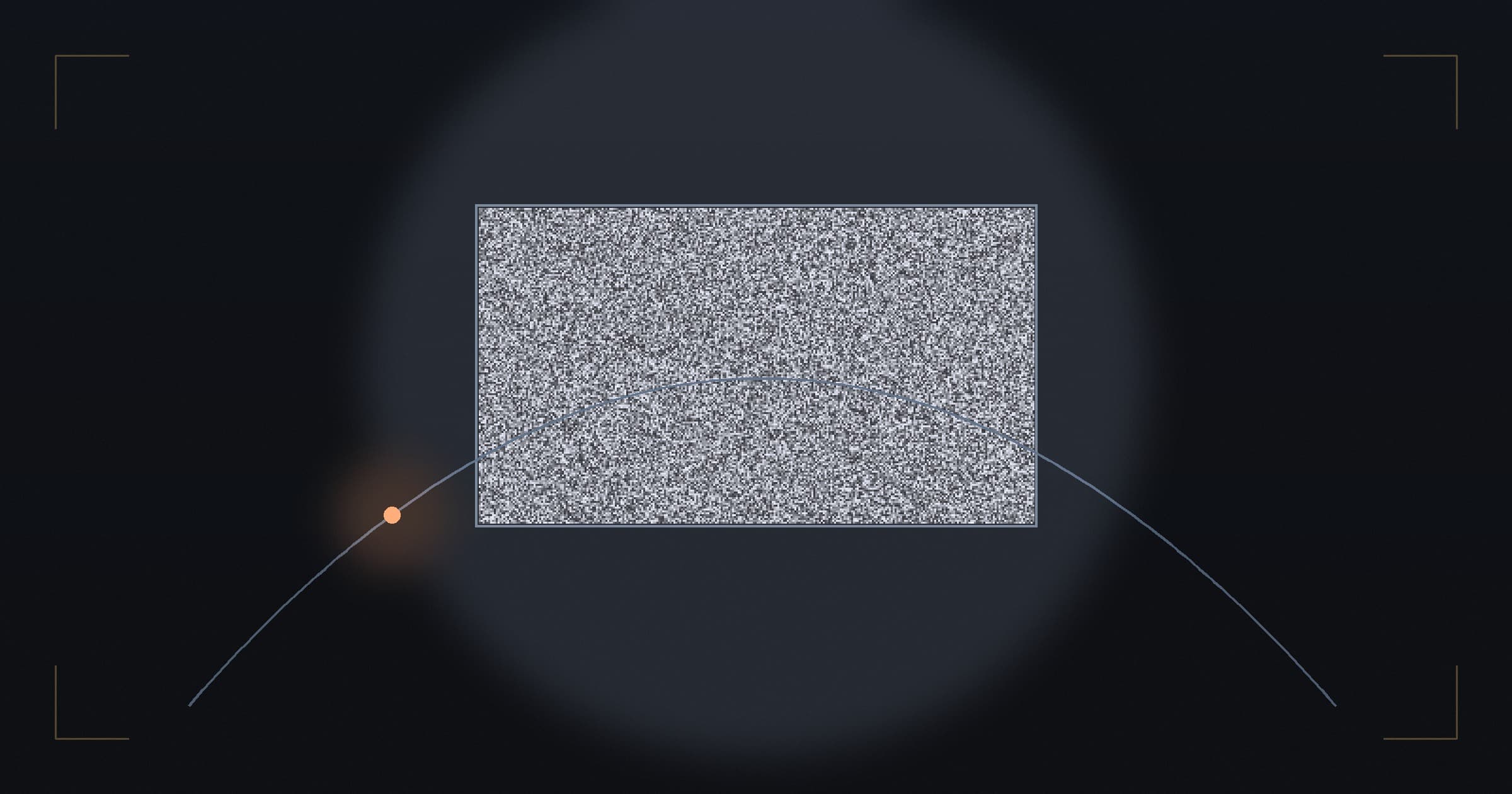
In 2018, a curiosity-driven agent froze, hypnotized, in front of a TV tuned to static — the noisy-TV problem, which reinforcement learning spent seven years taming. I swept four literatures for the same trap in the curiosity instrumentation of LLM agents: nobody has formalized it. And it is not hypothetical — in the experimental agent I keep on my own machine, the instrument's noise (σ=0.177) is larger than the signal it is supposed to measure.
#agentes#llm#curiosidade#noisy-tv#embeddings#reinforcement-learning
Data centers "will consume more than 1,000 TWh in 2026 — the equivalent of Japan," the AI statistics roundups repeat. I went and checked: the IEA itself has retired the number; the current series measures 485 TWh. I checked the most-circulated AI statistics one by one, at the primary source, and the scoreboard has checks-out, half-truth, fossil, and zombie — with one pattern: the omitted denominator ("53% of the population" was the US, ages 18-64). Plus the Brazil step no international version has: 84% of university students have already used genAI, while the country sits outside the top 15 for private investment.
#ia#estatisticas#fact-check#energia#brasil
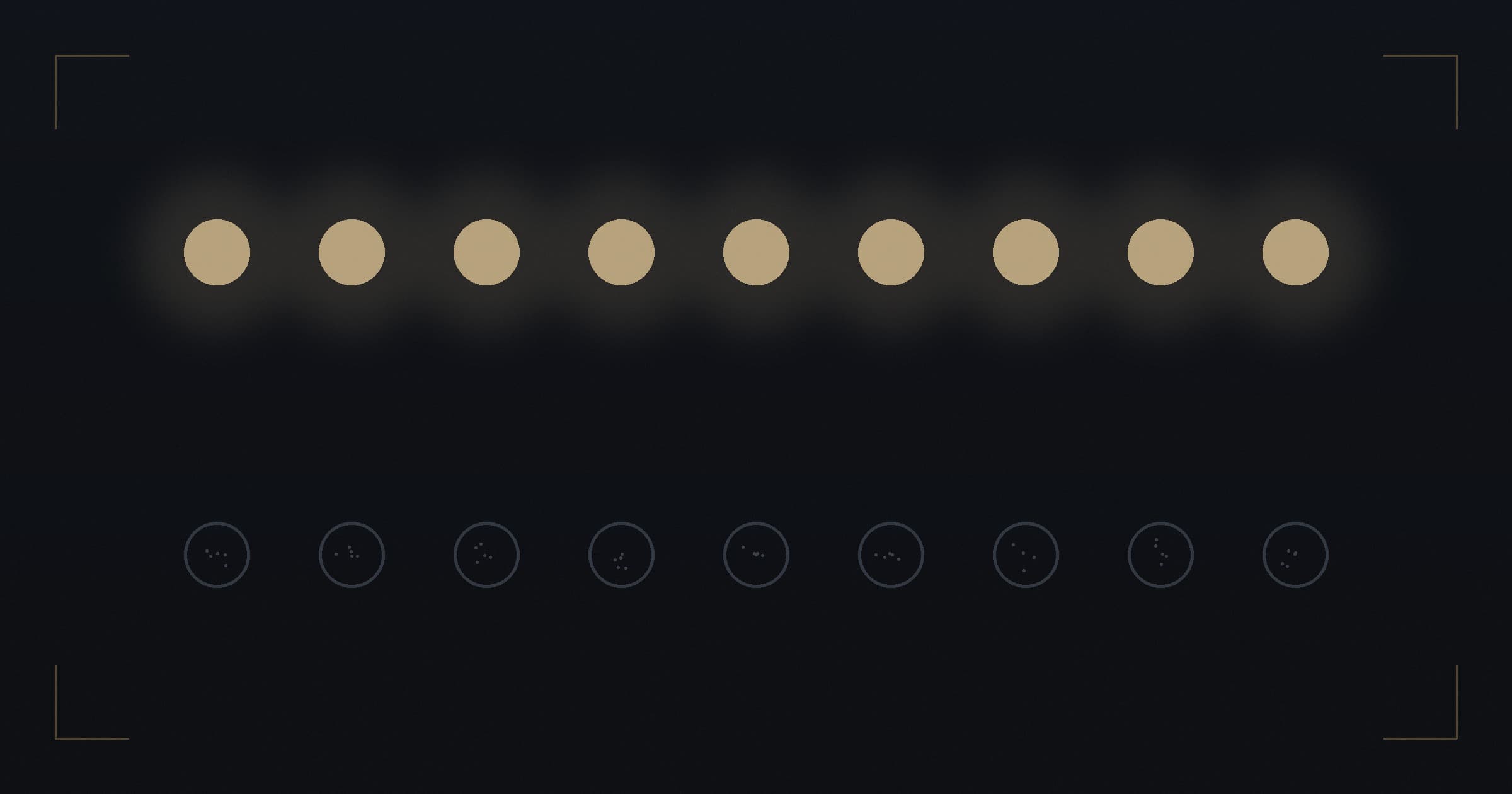
The headline says DeepSeek’s cheap model beats the house flagship. The model card says more: Opus 4.8 wins all nine rows of the table — published by DeepSeek itself. Why announcing your own defeat works when you cost 89 times less, what the jump from 7.3 to 54.4 with no new architecture says about post-training, and what the first 48 hours outside the harness confirmed and debunked.
#deepseek#llm#api#benchmarks#open-weights
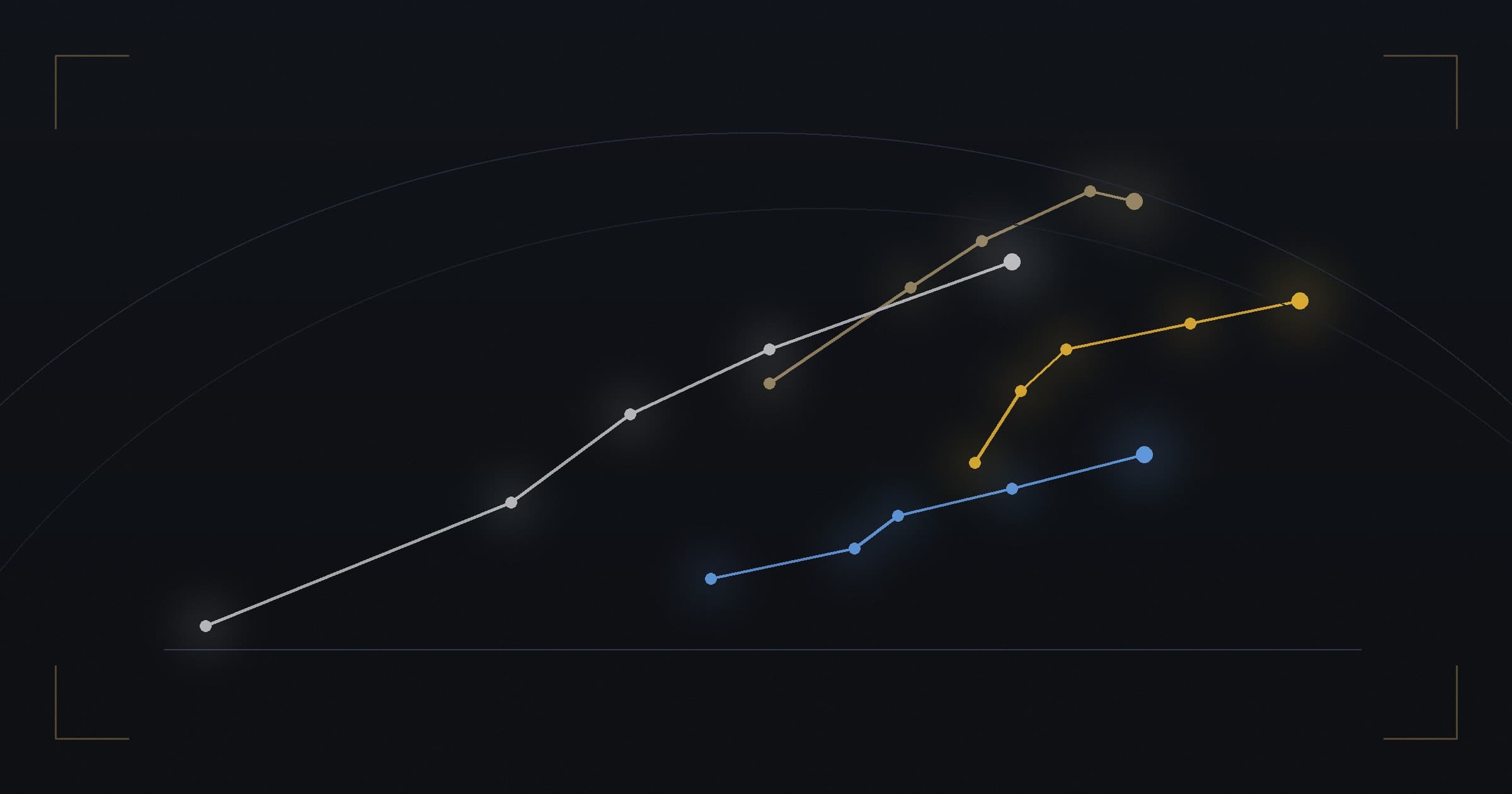
Anthropic launched Claude Opus 5 promising frontier intelligence at half the price. What actually changed in the API, what the announcement’s charts show once you open the images — including that maximum effort makes results worse — and why the community’s top-voted joke does not survive a fact-check.
#claude#anthropic#llm#api#benchmarks